
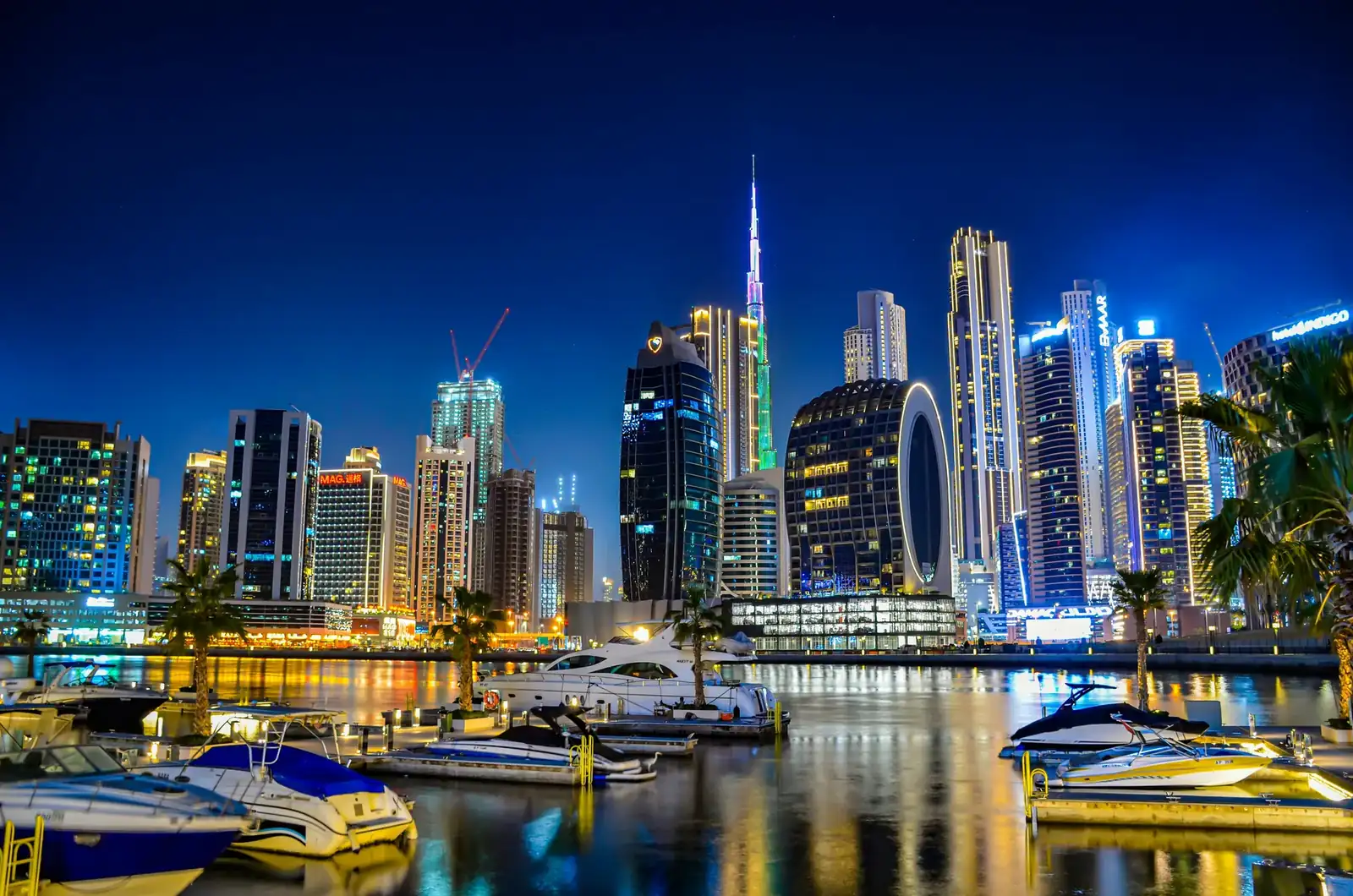

The United Arab Emirates is often presented through superlatives: the tallest tower, the largest mall, the boldest skyline. Those icons matter, but the country becomes more interesting when modern ambition is placed beside desert, maritime history, religious architecture and oasis culture.
A well-designed UAE journey balances Dubai and Abu Dhabi with at least one experience beyond the city center.
Dubai: architecture and movement
Dubai delivers immediate visual impact. The Burj Khalifa, Museum of the Future, Palm Jumeirah and Marina represent the city’s confidence in large-scale design. Yet older Dubai along the Creek, the souks and traditional trading districts tells a different story.
Travelers who only move between malls and observation decks see the spectacle but miss the city’s origins. A better plan places the modern skyline and the historic creek in the same journey.
Abu Dhabi: culture and space
Abu Dhabi feels broader and more measured. Sheikh Zayed Grand Mosque is one of the region’s most significant contemporary religious buildings. Louvre Abu Dhabi uses architecture and collection to position the city within a global cultural conversation.
Qasr Al Watan and the Corniche add political and urban context. Abu Dhabi can be visited as a day trip from Dubai, but an overnight stay creates a calmer experience.
Al Ain: the deeper historical layer
Al Ain introduces oasis systems, archaeological sites and a greener inland landscape. It helps correct the impression that the UAE began with oil and skyscrapers.
For travelers interested in history, agriculture and the long human relationship with desert water, Al Ain adds depth that the main city icons cannot provide.
The desert experience
The desert sits surprisingly close to the cities, but not every excursion offers the same quality. A thoughtful experience should match dune driving, camel time, camp atmosphere and comfort to the traveler.
Guests with back problems, pregnancy or severe motion sensitivity can avoid intense dune driving and still enjoy sunset, conservation areas and camp activities.
How many days do you need?
Four to five days covers the principal Dubai and Abu Dhabi icons. Six to seven days allows time for the desert and Al Ain without constant movement. Eight days or more can include the eastern coast, Ras Al Khaimah or a more relaxed beach stay.
Plan around climate and time of day
Outdoor experiences are usually best in the morning and late afternoon. Midday suits museums, galleries, hotels and indoor attractions, particularly during warmer months. Evening is when both Dubai and Abu Dhabi become most animated.
Operating details, access rules and seasonal events change, so they should be confirmed for the actual travel dates.
Pairing the UAE with Jordan
Jordan and the UAE create one of the region’s strongest contrasts. Petra and Wadi Rum offer ancient stone, desert silence and slower cultural encounters. Dubai and Abu Dhabi add contemporary architecture, global dining and urban energy.
The contrast works best when Jordan comes first and the UAE becomes the modern final chapter, though the reverse sequence can suit travelers who want to end in stillness.
Explore the UAE or combine it with Jordan in a multi-country private journey.
0 Comment