
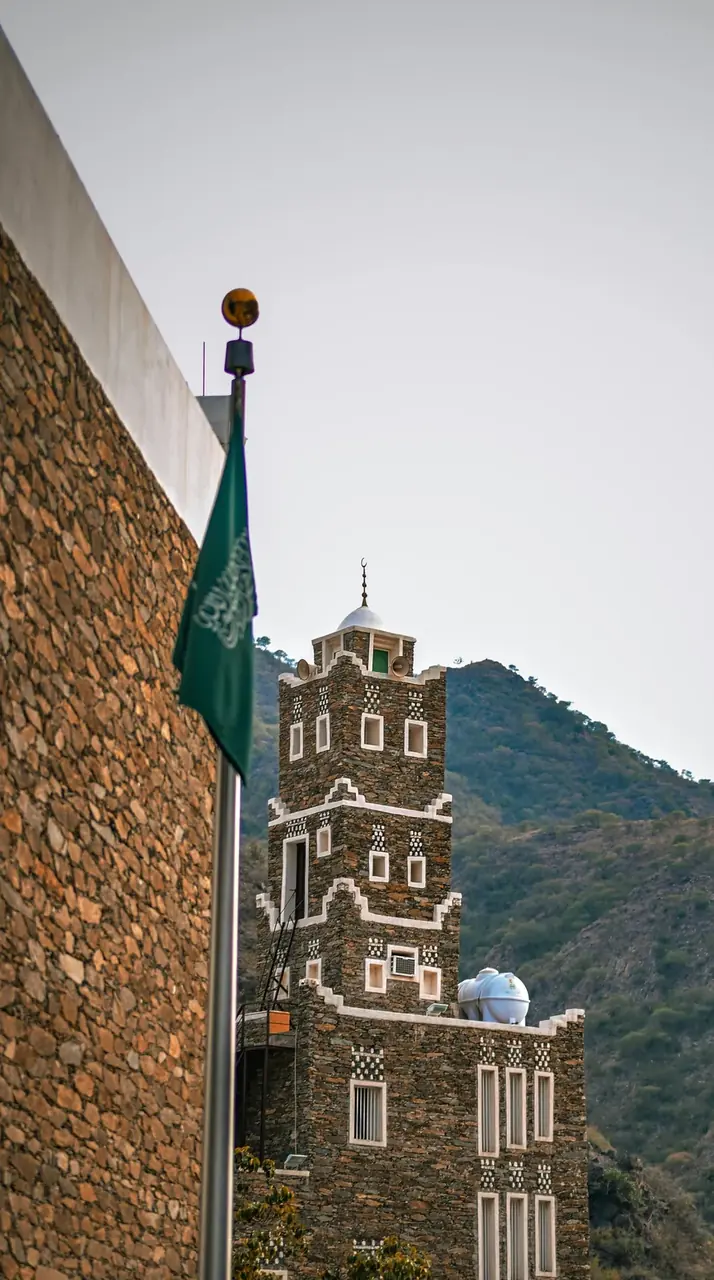

Saudi Arabia is best understood through contrast. AlUla holds monumental desert archaeology. Riyadh places a modern capital beside the mud-brick origins of the kingdom. Jeddah connects Red Sea trade, coral-stone architecture and contemporary coastal life.
A strong first journey usually follows this heritage triangle rather than trying to cover the entire country.
AlUla: the archaeological anchor
AlUla is the natural starting point for travelers arriving from Jordan or those whose main interest is heritage. Hegra contains Nabataean tombs carved into isolated sandstone formations, including the monumental Qasr Al-Farid.
The wider region adds Jabal Ikmah, Dadan, the oasis and AlUla Old Town. Together, they show that Hegra is not an isolated attraction but part of a much longer cultural landscape.
Accommodation has become a major part of the AlUla experience. Canyon resorts and desert properties can be remarkable, but proximity, privacy and the actual inclusions matter more than the brand name alone.
Riyadh: kingdom, capital and contrast
Riyadh gives context to modern Saudi Arabia. Diriyah and At-Turaif reveal the historic heart of the state through restored mud-brick palaces and urban form. The National Museum extends the story from prehistory into the modern kingdom.
The city’s glass towers, dining scene and business districts create an immediate contrast with the heritage sites. That contrast is one of the reasons Riyadh deserves more than a connection between flights.
Jeddah: Red Sea history
Jeddah is the most relaxed chapter of the classic route. Al-Balad’s coral-stone merchant houses and wooden rawasheen balconies reflect centuries of trade and pilgrimage. The Corniche, seafood and modern city create a coastal ending after the intensity of AlUla and Riyadh.
For travelers interested in architecture, Al-Balad should be explored slowly and with context. It is living urban heritage, not an open-air museum.
How long do you need?
Five to six days can cover AlUla and Riyadh. Seven to eight days allows the full AlUla–Riyadh–Jeddah triangle at a more reasonable pace. Ten days or more makes room for the Red Sea, the Asir Mountains or a deeper focus on archaeology and culture.
Practical planning principles
- Use domestic flights where long road distances would reduce the quality of the journey.
- Plan outdoor heritage visits around heat and light.
- Dress modestly and follow local customs.
- Confirm current access, ticketing and permit requirements for the travel dates.
- Choose guides who can connect archaeology with living Saudi culture.
Saudi Arabia and Jordan together
Jordan is the most natural pairing. Petra and Hegra tell connected chapters of Nabataean history, while Amman, Wadi Rum, Diriyah and Jeddah add entirely different layers.
A combined journey should not rush the border or treat one country as an extension of the other. Each deserves its own pacing and emotional space.
Explore Saudi Arabia and connect it with Petra through a privately designed regional route.
0 Comment