
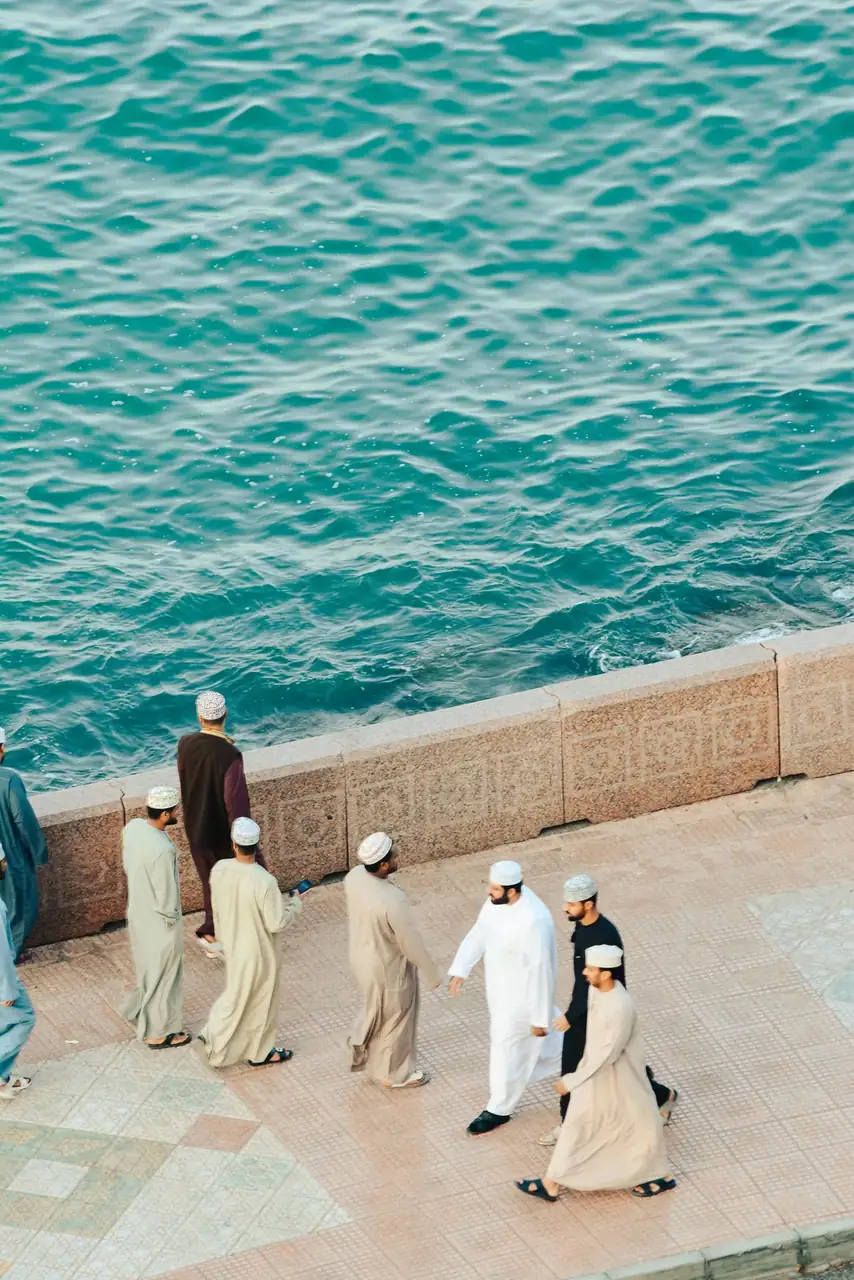

Oman is one of Arabia’s most complete natural journeys. Within one country, travelers can move from Muscat’s white architecture to mountain villages, palm-filled wadis, desert camps and a long coastline shaped by trade and seafaring.
The appeal is not spectacle alone. Oman feels grounded. Hospitality is quiet, landscapes are accessible with the right planning, and the pace suits travelers who prefer depth over constant entertainment.
Muscat: a measured introduction
Muscat is the best starting point. The city stretches between sea and mountains, with a low-rise profile that feels very different from the skylines elsewhere in the Gulf. The Grand Mosque, Muttrah Corniche, the souk and the old harbor create a balanced first impression of architecture, faith and maritime history.
One or two nights gives enough time to arrive well, understand the country’s rhythm and prepare for the road journey inland.
Nizwa and the interior
Nizwa provides access to forts, traditional markets and the cultural heart of the interior. It also works as a bridge between Muscat and the mountain regions.
Travelers interested in history and local life should allow enough time for the town itself rather than treating it only as a fuel stop on the way to Jebel Akhdar.
Jebel Akhdar: Arabia at altitude
Jebel Akhdar challenges the idea that Oman is only desert. Terraced farms, villages and cooler air define the mountain experience. The road requires an appropriate four-wheel-drive vehicle, and the value of the region comes from staying long enough to walk, look and slow down.
Luxury mountain resorts can be exceptional, but the most important choice is location and access to the landscape.
Wadi Shab and the eastern coast
Wadi Shab is one of Oman’s most memorable natural experiences: a canyon walk leading to pools and, for capable swimmers, a hidden cave. The experience should be matched to fitness and swimming confidence. Non-swimmers can still enjoy parts of the route without forcing the deepest sections.
Nearby Sur adds maritime history, while Ras Al Jinz introduces the possibility of guided turtle observation during the appropriate season. Wildlife sightings are never guaranteed, so the experience should be planned respectfully rather than treated as a performance.
Wahiba Sands: desert without hurry
Wahiba Sands gives the route its desert chapter. A good stay includes sunset, dinner, the night sky and sunrise. The most comfortable itineraries arrive with time to settle rather than reaching camp after dark.
As with Wadi Rum, the desert is most meaningful when travelers allow silence into the schedule.
How long should you stay?
Five days can introduce Muscat, Nizwa and one natural region. Seven to nine days creates the fuller Oman experience: city, mountains, wadi, coast and desert. Longer stays make room for Salalah, the Empty Quarter or a more relaxed beach ending.
Who is Oman best for?
- Travelers who value landscape and culture equally.
- Families who want nature without an overly fast pace.
- Couples seeking refined but understated travel.
- Photographers drawn to mountains, villages and desert light.
- Multi-country travelers pairing Oman with Jordan.
Pairing Oman with Jordan
Jordan and Oman create a strong natural combination. Petra and the Dead Sea bring archaeological and geological drama; Oman adds wadis, mountain agriculture and a different Arabian coastal tradition.
The result is diverse without feeling disconnected.
Explore Oman or combine it with Jordan through a private multi-country journey.
0 Comment