
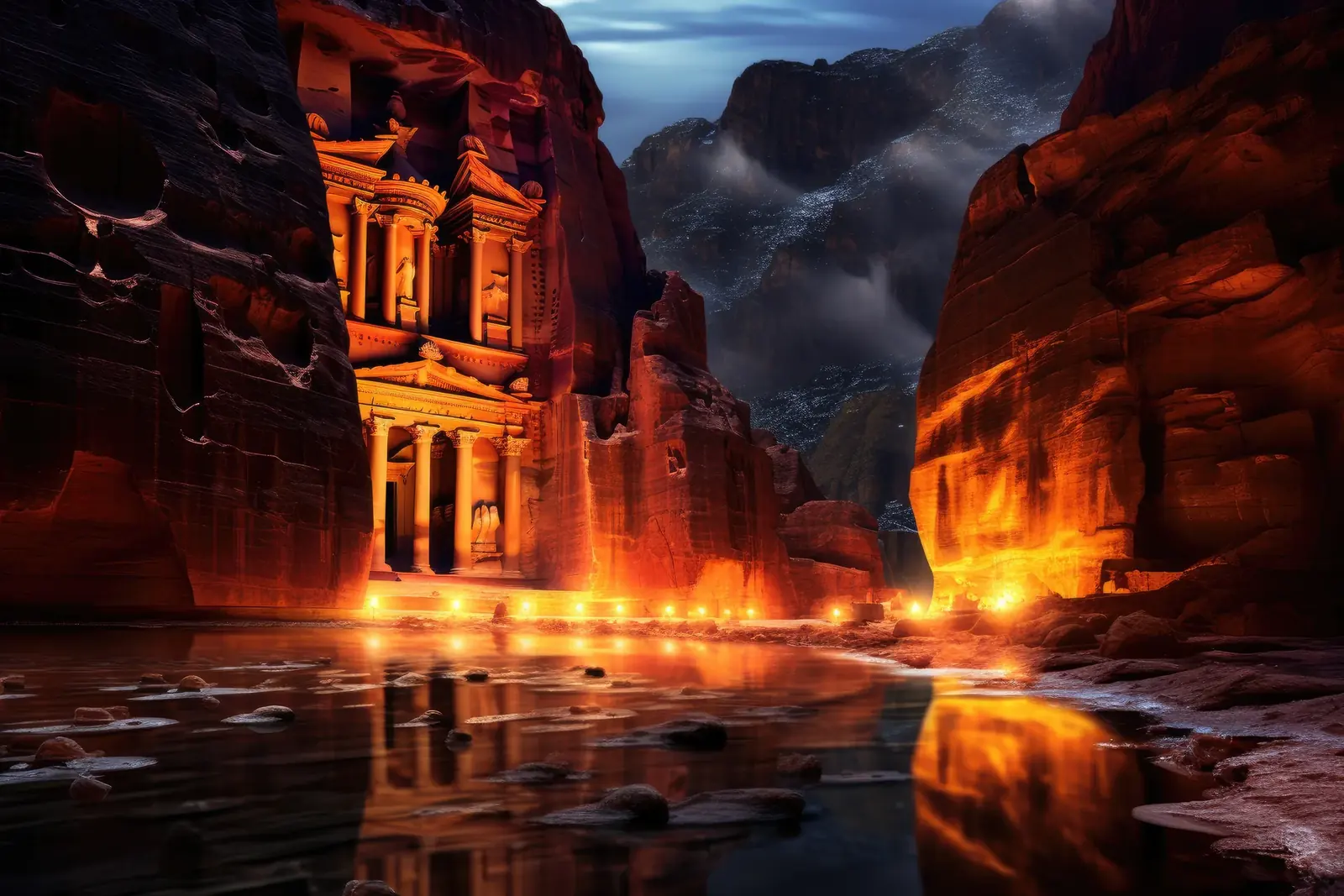

Petra and Hegra are often compared because both contain monumental Nabataean tombs carved into sandstone. The comparison is useful, but the real value comes from seeing them together.
Petra was a vast urban and ceremonial landscape. Hegra presents a more dispersed necropolis set among isolated desert formations. Each reveals a different part of the same civilization’s relationship with trade, water, architecture and the desert.
Petra: a city revealed through movement
Petra unfolds gradually. The Siq creates a long ceremonial approach before the Treasury appears. Beyond it, the site expands into theatres, tombs, temples, streets and mountain routes.
The experience is physical. Walking is central to understanding the scale of the city and the way its monuments relate to the landscape. Two days usually gives the best balance between the main trail and the Monastery or quieter routes.
Hegra: monuments in open desert
Hegra feels different. Its tombs are distributed across a broad desert landscape, often standing alone against open sky. Qasr Al-Farid is especially striking because it appears carved from a single isolated outcrop.
The AlUla region adds Jabal Ikmah, Dadan, the oasis and the old town, placing Hegra within a deeper sequence of settlement and cultural exchange.
What connects them?
- Trade: Both cities were shaped by routes moving incense, spices and goods across Arabia.
- Water: Nabataean engineering made settlement possible in difficult environments.
- Stone architecture: Monumental facades communicated identity, status and belief.
- Desert geography: The landscape was not empty background; it was part of the urban system.
What makes them different?
Petra feels like a city entered through a narrative. Hegra feels like a collection of monuments discovered across space. Petra demands more walking and time inside one vast archaeological zone. Hegra is usually explored through controlled access and guided movement across the wider site.
Seeing both prevents one from becoming a substitute for the other.
How to connect Jordan and Saudi Arabia
A multi-country journey should protect sufficient time in each place. Petra works best as a multi-night anchor. AlUla also deserves more than a single excursion because Hegra is only one part of the destination.
The route may continue overland or by air depending on border conditions, flight schedules and the wider itinerary. These operational details should be confirmed specifically for the travel dates rather than assumed.
Who will value this journey most?
- Travelers interested in archaeology and ancient trade.
- Photographers drawn to carved sandstone and desert light.
- Repeat visitors to Jordan seeking a deeper regional story.
- Travelers who prefer connected historical themes over disconnected highlights.
A journey built around context
Jordan Journey was founded on the idea that travel becomes meaningful through people, relationships and informed design. Petra and Hegra are a perfect example. The monuments are extraordinary, but the deeper story appears when a guide connects them to routes, water, language, trade and living communities.
Explore Petra, continue to Saudi Arabia, or ask our team to design the complete Nabataean route.
0 Comment