Full-day exploration of Jerash with a licensed archaeologist guide

From $195.00 per person
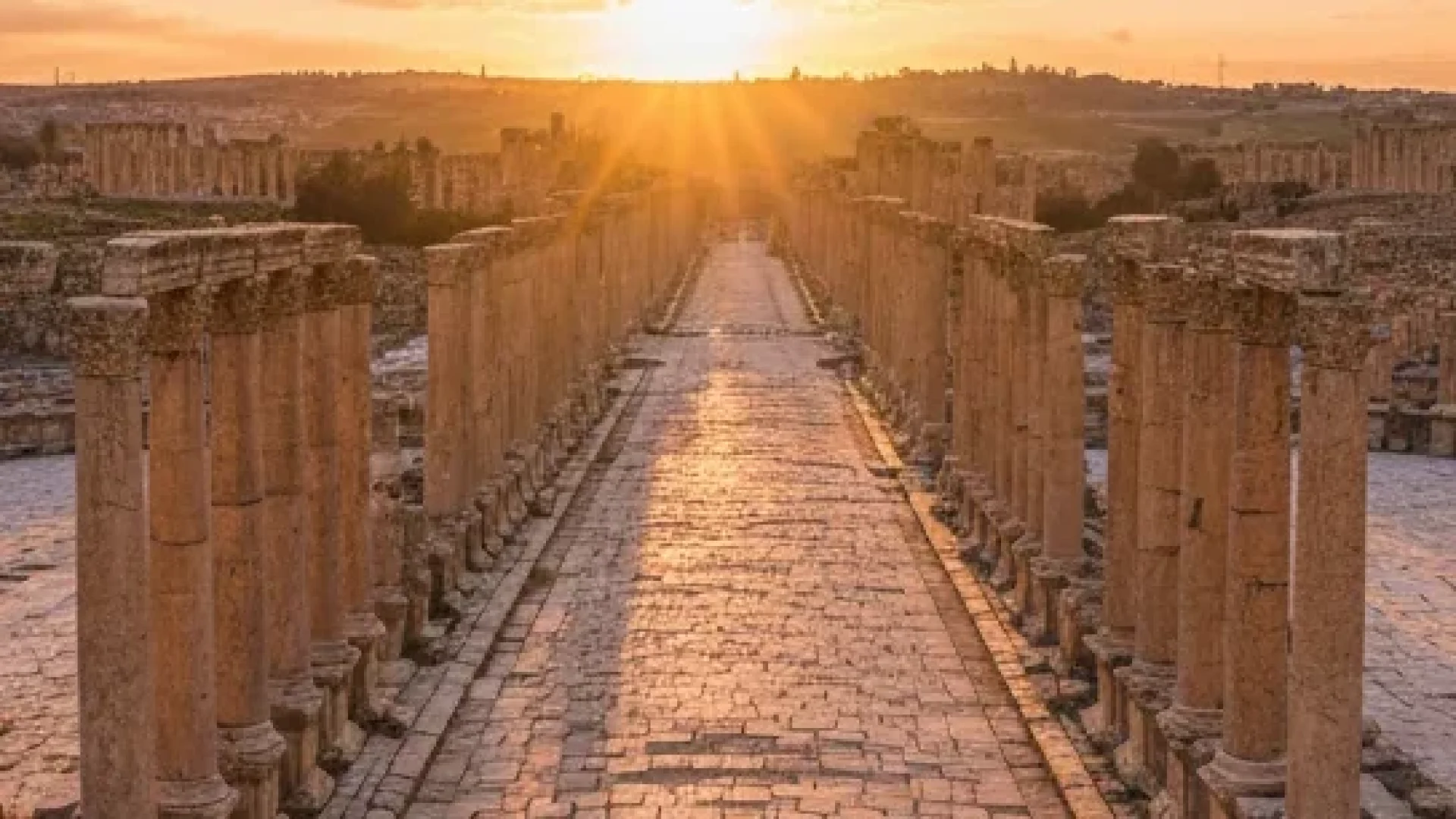
Roman Cities Jordan Tour: Explore the best-preserved Roman cities outside Italy. Private planning and local support included.
Continue planning with our Oman tours, and consult the official Jordan Tourism Board for current destination information.
Explore Jordan’s extraordinary Roman heritage across three of the ten ancient Decapolis cities. Day 1 is devoted entirely to Jerash (ancient Gerasa), one of the best-preserved Roman provincial cities in the world. Walk the colonnaded Cardo Maximus, stand in the oval plaza, and climb the steps of the Temple of Artemis with an archaeologist guide who has excavated at the site. Overnight in Jerash or Amman, then continue to Umm Qais (ancient Gadara) on Day 2 for views over the Sea of Galilee and Golan Heights, followed by Pella (ancient Pella) where continuous human settlement spans 6,000 years from the Bronze Age through the Byzantine period.
This is not a quick photo-stop tour. You spend a full day at Jerash (the best-preserved Roman city outside Italy) with a licensed archaeologist guide who has excavated at the site. The second day visits Umm Qais (ancient Gadara) with its dramatic views over the Sea of Galilee and Golan Heights, and Pella (ancient Pella) where Bronze Age, Hellenistic, and Byzantine layers coexist. Your guide holds a master’s degree in classical archaeology and has published research on Decapolis urban planning. No other operator provides this academic depth for a 2-day program.
Key details for planning this private journey experience.
Full-day exploration of Jerash with a licensed archaeologist guide
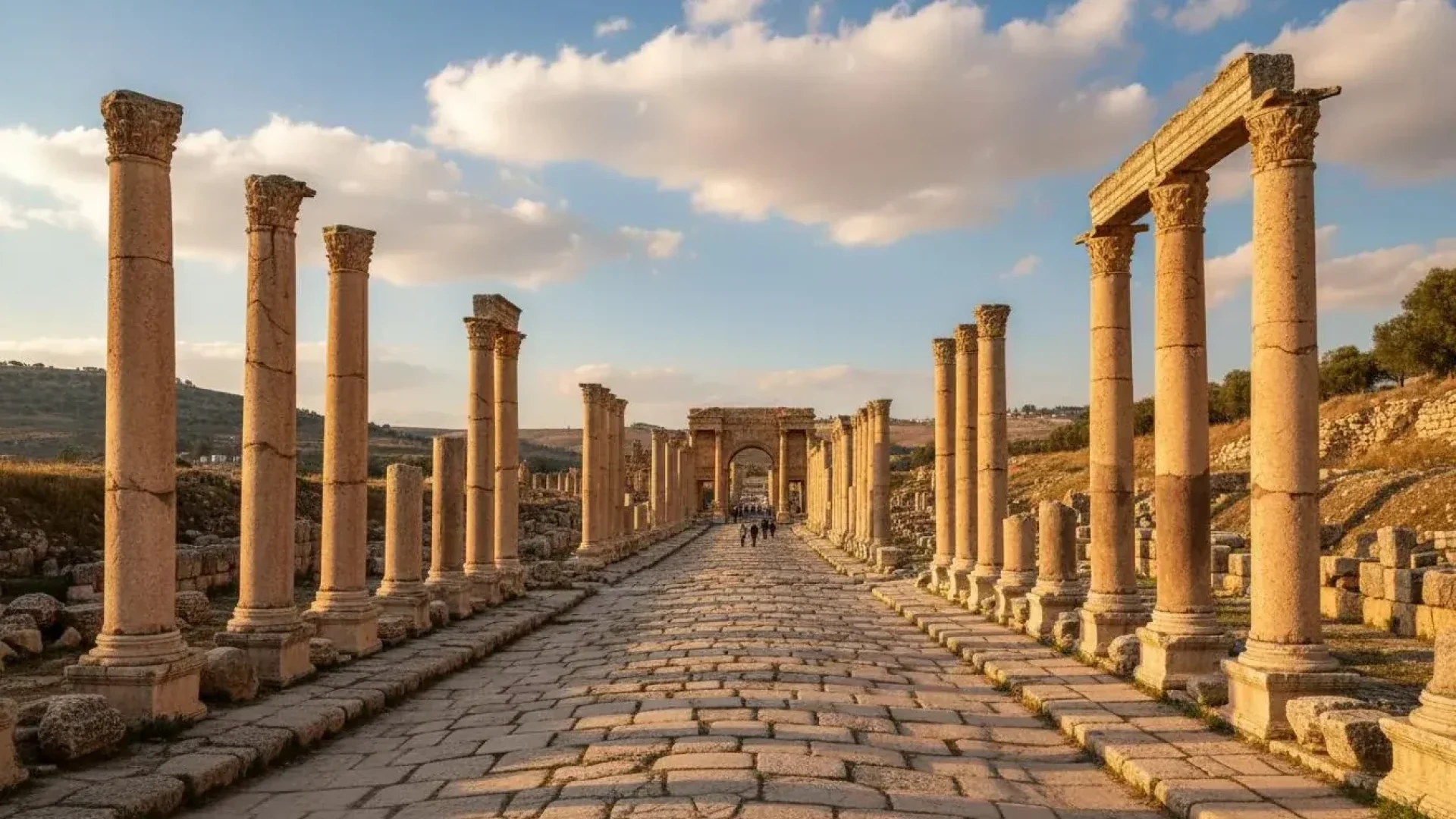
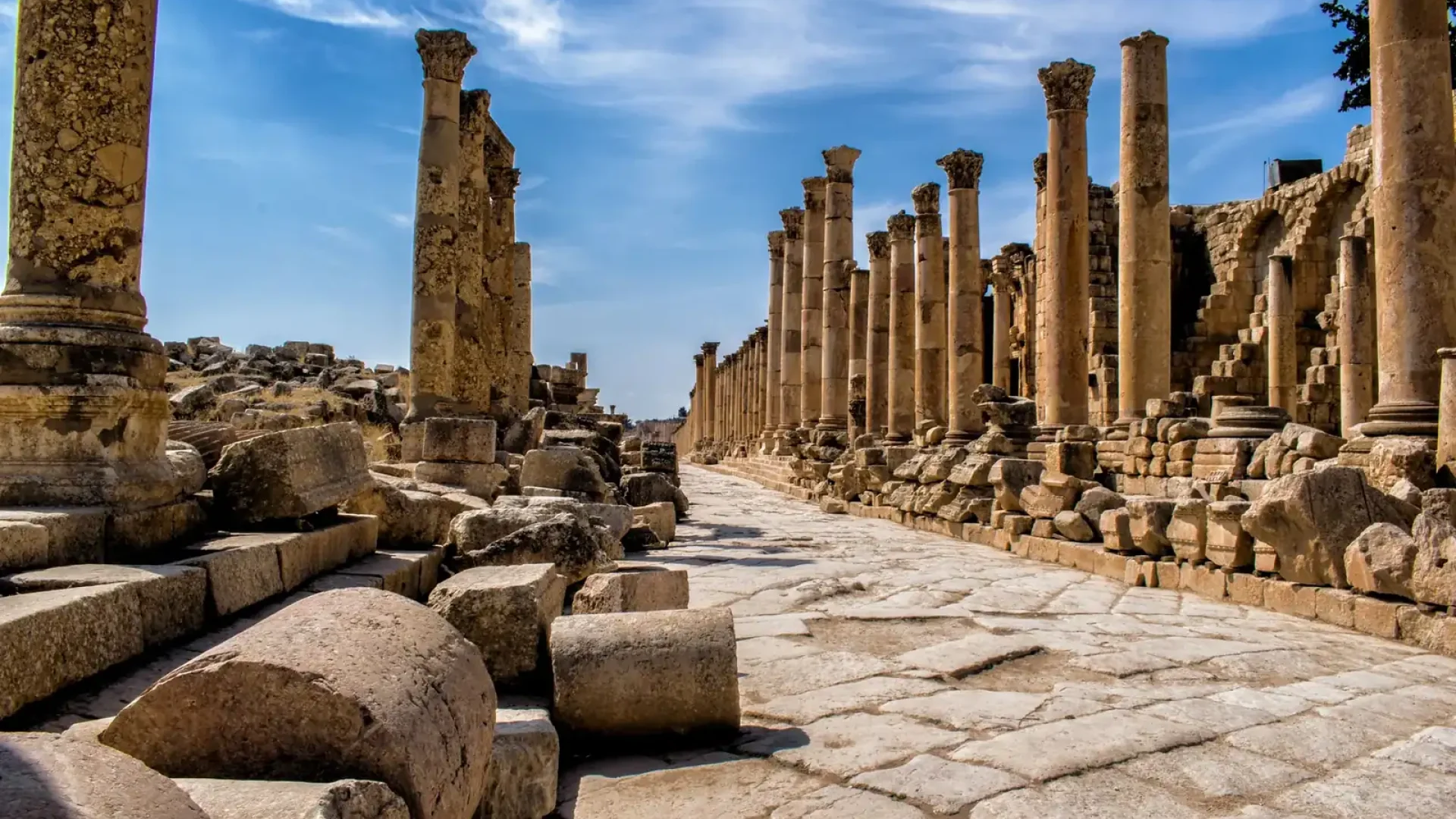
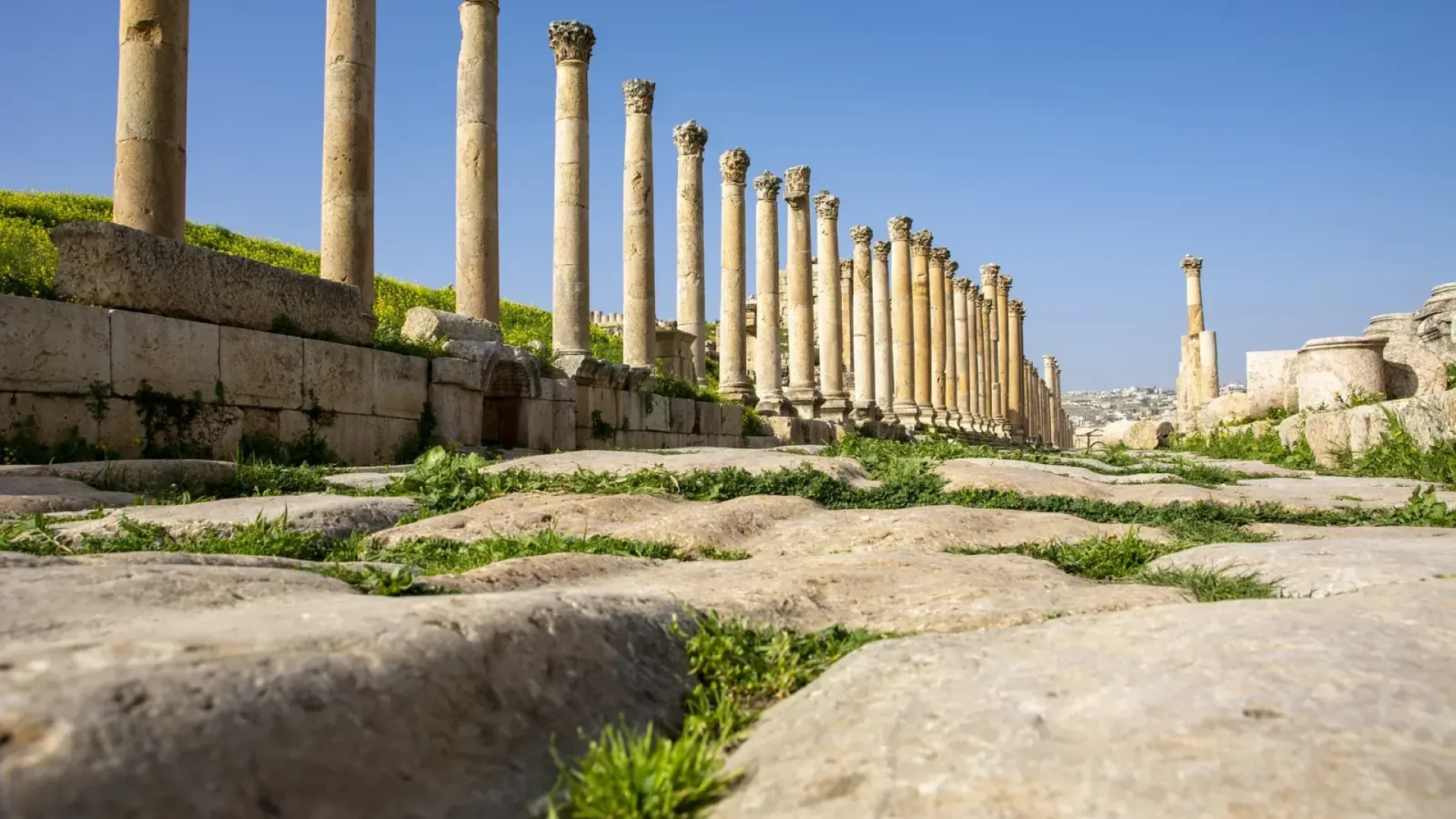
Walk the 2,000-foot colonnaded Cardo Maximus, Jerash's main street
Climb the Temple of Artemis for panoramic views of the ancient city
Visit the Jerash Archaeological Museum with artifacts from excavations
Umm Qais: dramatic views of the Sea of Galilee and Golan Heights
Umm Qais West Theater: the only Roman black basalt theater in the world
Pella: continuous settlement layers from Bronze Age to Byzantine
Pella Byzantine church mosaics and Bronze Age temple remains
A simple view of what is covered in this journey and what should be planned separately.
Drive north to Jerash (1 hour). Your archaeologist guide introduces the Decapolis league and Gerasa's role in the Roman East.
Enter through Hadrian's Arch, built in 129 AD to honor the emperor's visit. Your guide explains the arch's architectural significance and the imperial cult.
Stand in the 15,000-seat chariot racing stadium and learn about Roman entertainment culture. Optional chariot reenactment demonstration (seasonal, additional $10).
Walk through the city walls into the perfectly preserved oval forum, surrounded by 56 Ionic columns.
Walk the 2,000-foot paved street lined with 500 columns. Your guide points out the ruts left by Roman chariot wheels, the underground drainage system, and the remains of shops and workshops.
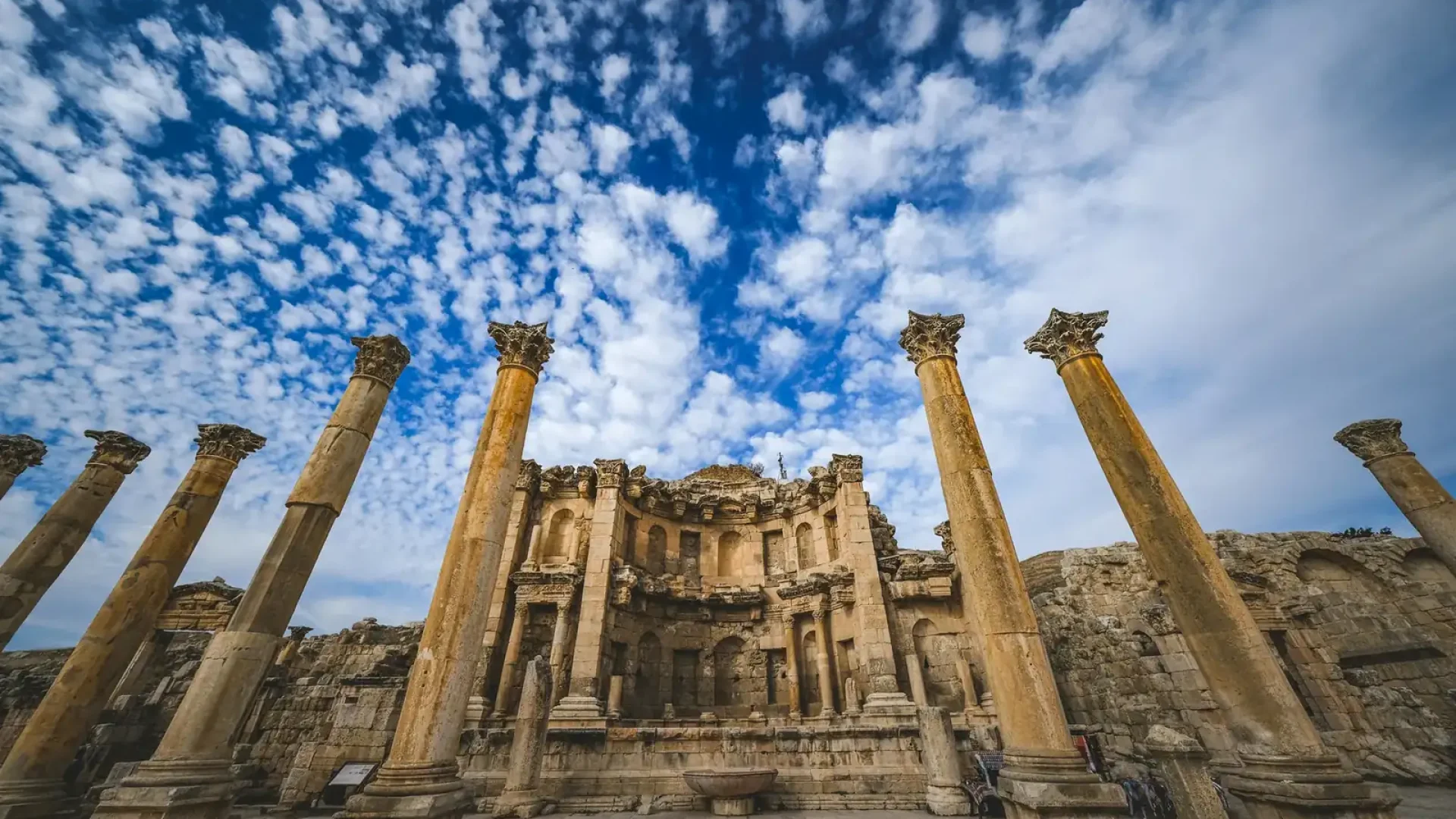
Visit the ornate public fountain and the Byzantine-era church built over earlier Roman structures.
Climb to the upper tiers of the 2,000-seat theater for excellent acoustics and views. Your guide demonstrates the theater's sound engineering.
Climb the monumental staircase to the temple platform. Your guide explains the construction techniques, the cult of Artemis, and the temple's role in the city's religious life.
View artifacts from excavations including mosaics, coins, pottery, and statues. Your guide provides context for each display.
Admire the well-preserved floor mosaics depicting medical saints, animals, and geometric patterns.
Return to your favorite spots for photography or independent contemplation.
Transfer to your overnight hotel in Jerash or return to Amman (your choice at booking).
Evening discussion session with your guide: "The Decapolis Cities: Rome's Legacy in the Middle East."
Check out and depart.
The road passes through the fertile Yarmouk River valley.
Enter the archaeological park and walk to the viewpoint terrace. The panorama includes the Sea of Galilee, the Golan Heights, and the Yarmouk Gorge.
Explore the unique black basalt theater, built from local volcanic stone. Your guide explains the acoustics and theatrical traditions of Gadara.
Walk through the remains of a 5th-century Byzantine church with mosaic floors and column bases.
Descend into a well-preserved family tomb with burial niches and carved decorations.
Explore the 18th-century village built directly on top of Roman ruins, with stone houses still inhabited until the 1980s.
Housed in the former residence of the Ottoman governor, the museum displays mosaics, statues, and daily life artifacts from Gadara.
The road descends through the Jordan Valley with views of the dam and agricultural fields.
Your guide explains the site's unique importance: 6,000 years of continuous human settlement from the Bronze Age through the Islamic period.
Walk through Bronze Age temple remains, Iron Age city walls, and Hellenistic houses stacked in archaeological layers.
Admire the 6th-century church mosaics depicting hunting scenes, geometric patterns, and Christian symbols.
Explore the small theater and the well-preserved bath complex with hypocaust heating system remains.
Visit the natural spring that made Pella habitable for 6,000 years. Local families still gather water here.
Return drive to Amman (1.5 hours) or continue to the Jordanian border for travelers heading to Syria or Israel (advance coordination required).
Drop-off at your hotel.
Everything important for planning, comfort, access, timing, and on-the-ground expectations.
Start Point: Hotel pickup in Amman (any district). Pickup time: 07:00. For travelers staying outside Amman, pickup from Jerash hotels is possible with schedule adjustment. Contact your travel advisor to coordinate.
End Point: Drop-off at your Amman hotel by approximately 18:00 on Day 2. For travelers continuing to the Syrian or Israeli borders, drop-off at the Sheikh Hussein Bridge or King Hussein Bridge can be arranged (advance notice required, no additional cost for border drop-off).
Meeting Point: Your guide meets you at the hotel reception at 07:00. The guide introduces themselves, confirms the itinerary, and answers any questions before departure.
Total: JJ-EXP-031 • 2 Days • 1 Night
Pace: Easy. This is a walking tour on flat, paved archaeological sites. Total walking per day: 2-3 miles on mostly level ground with some uneven stones. The Temple of Artemis at Jerash requires climbing a steep staircase (moderate, 5 minutes). The Umm Qais viewpoint is accessible by a gentle slope. Pella involves some walking on grassy terrain. This tour is suitable for travelers of all fitness levels, including seniors and those with limited mobility. Wheelchair access is limited at some sites: contact us for details.
Guide: Your guide is a licensed archaeologist with a master’s degree in classical archaeology from the University of Jordan. They have participated in excavations at Jerash and Umm Qais and have published research on Decapolis urban planning. They speak Arabic and fluent English. French and German-speaking guides are available on request (72-hour notice, $60 supplement).
Driver: A professional Jordan Journey driver handles transportation. The driver does not provide archaeological commentary but ensures safe, comfortable transfers between sites. All drivers are trained in first aid.
Vehicle: Air-conditioned sedan (1-2 passengers) or minivan (3-6 passengers). Vehicles are less than 5 years old with first aid kits and bottled water. For Premium packages, a luxury vehicle is provided.
One night at a 3-star hotel (Classic) or 4-star boutique hotel (Premium) in Jerash or Amman. Jerash hotels offer views of the ruins from the rooftop terrace and are walking distance from the archaeological park. Amman hotels provide more dining and entertainment options. The choice is yours at booking.
Day 1 lunch (restaurant overlooking Jerash ruins), Day 1 dinner (hotel or local restaurant), Day 2 breakfast (hotel buffet), Day 2 lunch (restaurant at Umm Qais with Sea of Galilee view). Meals feature traditional Jordanian cuisine with vegetarian options available. Alcohol is not included but available for purchase at most restaurants.
Physical Rating: Easy. This is a walking tour on flat, paved archaeological sites. Total walking per day: 2-3 miles on mostly level ground with some uneven stones. The Temple of Artemis at Jerash requires climbing a steep staircase (moderate, 5 minutes). The Umm Qais viewpoint is accessible by a gentle slope. Pella involves some walking on grassy terrain. This tour is suitable for travelers of all fitness levels, including seniors and those with limited mobility. Wheelchair access is limited at some sites: contact us for details.
Age Requirements: Minimum age: 12 years. The archaeological content and extended walking are not suitable for young children. Teenagers 12+ with an interest in history enjoy this tour. There is no maximum age limit.
Group Size: Classic: 2-6 participants (shared group). Premium: 1-6 participants (private guide). For academic groups larger than 6, multiple guides are assigned.
Classic Package: 3-star hotel in Jerash or Amman, standard restaurant meals, shared guide (you may be joined by other travelers). Premium Package: 4-star boutique hotel in Jerash, upgraded restaurant dining, private guide (your group only), extended time at each site, and a copy of your guide’s published research paper on Decapolis urban planning. Single supplement: $65 for solo travelers. Archaeology students with valid ID receive 15% discount.
Northern Jordan is cooler than Amman. Summer (June-August): 80-95°F daytime, 60-70°F nighttime. Winter (December-February): 50-60°F daytime, 40-50°F nighttime with occasional rain. Spring and autumn: ideal 65-80°F. The Jerash valley can be windy year-round.
Optimal Window: March through May and September through November offer ideal temperatures for extended outdoor walking. Spring brings wildflowers to the Jerash valley. Winter rain can make stone surfaces slippery but also creates dramatic cloud formations for photography. Summer mornings (before 11:00) are comfortable even in peak heat. Book 7-14 days in advance.
A 25% deposit confirms your booking. Balance due 14 days before departure. Cancellations more than 30 days before receive full refund minus $15 processing fee. Cancellations 14-30 days before receive 50% refund. Cancellations less than 14 days are non-refundable but transferable. No-shows charged in full.
This is not a quick photo-stop tour. You spend a full day at Jerash (the best-preserved Roman city outside Italy) with a licensed archaeologist guide who has excavated at the site. The second day visits Umm Qais (ancient Gadara) with its dramatic views over the Sea of Galilee and Golan Heights, and Pella (ancient Pella) where Bronze Age, Hellenistic, and Byzantine layers coexist. Your guide holds a master’s degree in classical archaeology and has published research on Decapolis urban planning. No other operator provides this academic depth for a 2-day program.
All sites visited are UNESCO World Heritage or tentative list candidates. A $10 donation from each booking supports the Jerash Department of Antiquities conservation fund. The tour follows UNESCO ethical guidelines: no touching or climbing on ancient structures, no removing artifacts, no flash photography in protected areas. Your archaeologist guide educates you on preservation challenges and ongoing excavation work.
Physical Rating: Easy. This is a walking tour on flat, paved archaeological sites. Total walking per day: 2-3 miles on mostly level ground with some uneven stones. The Temple of Artemis at Jerash requires climbing a steep staircase (moderate, 5 minutes). The Umm Qais viewpoint is accessible by a gentle slope. Pella involves some walking on grassy terrain. This tour is suitable for travelers of all fitness levels, including seniors and those with limited mobility. Wheelchair access is limited at some sites: contact us for details.
Age Requirements: Minimum age: 12 years. The archaeological content and extended walking are not suitable for young children. Teenagers 12+ with an interest in history enjoy this tour. There is no maximum age limit.
Group Size: Classic: 2-6 participants (shared group). Premium: 1-6 participants (private guide). For academic groups larger than 6, multiple guides are assigned.
Safety Protocols: All archaeological sites are managed by the Department of Antiquities with security personnel present. Uneven stone surfaces require attention while walking: watch your step and wear appropriate footwear. The Temple of Artemis staircase has no guardrails: hold the handrail and take your time. Summers are hot: carry water and take shade breaks. Winter rain makes stones slippery: walk slowly and avoid running.
Emergency Contact: Jordan Journey 24/7 emergency hotline: +962-XXX-XXXX. Jerash has a medical clinic (5 minutes from the site). Umm Qais has a rural health center. Pella is 30 minutes from Irbid’s major hospitals. All vehicles carry first aid kits.
Insurance Requirements: Comprehensive travel insurance is mandatory. Your policy must cover emergency medical treatment and trip cancellation. Jordan Journey does not provide insurance.
Expert FAQs
Useful labels that help compare this journey with other Jordan Journey experiences.
Clear answers before you reserve your journey.
Jerash is often called "the Pompeii of the East" though it was not destroyed by a volcanic eruption. It is the best-preserved Roman provincial city outside Italy because it was gradually abandoned rather than rebuilt over. The colonnaded street is longer and more complete than any in Rome itself. Unlike Italian sites that are crowded year-round, Jerash receives far fewer visitors, allowing a more contemplative experience. Your archaeologist guide provides context that connects Jerash to the broader Roman Empire.
Not at all. Your guide adapts their commentary to your level of knowledge. Beginners learn the fundamentals of Roman urbanism, architecture, and daily life. History enthusiasts receive deeper analysis of architectural styles, construction techniques, and historical context. The guide welcomes questions and enjoys engaging with curious travelers of all backgrounds.
Partially. Jerash's main entrance, colonnaded street, and oval plaza are accessible via paved paths. The theaters and Temple of Artemis require stair climbing and are not wheelchair accessible. Umm Qais has accessible viewpoints from the parking area. Pella has limited accessibility due to grassy terrain. Contact us before booking if you use a wheelchair: we can customize the route to focus on accessible areas.
Absolutely. This tour pairs well with: JJ-EXP-027 Cooking Class (evening of Day 2 in Amman), JJ-DUR-017 Petra Day Trip (Day 3), or JJ-EXP-032 Bedouin Culture (Day 3-4). Many travelers book this as the first two days of a longer Jordan itinerary. Contact your travel advisor for customized combinations.
Yes. French and German-speaking archaeologist guides are available with 72-hour advance notice ($60 supplement). Spanish and Italian guides are available subject to scheduling ($75 supplement). Arabic-speaking guides are standard for Arabic-speaking travelers at no additional cost.
Recommended: "Jerash: A Frontier City of the Roman East" by Geraldine Talbot (short, accessible). "The Decapolis" by Peter Scherrer (academic but readable). Your guide provides a printed timeline and map at the start of the tour. No advance reading is required: the guide's commentary is self-contained.
Yes. Jerash has modern restroom facilities near the entrance and at the museum. Umm Qais has restrooms near the museum. Pella has basic facilities near the entrance. All are maintained by the Department of Antiquities. Bring your own tissues and hand sanitizer as a backup.
Yes. The Jerash museum gift shop sells archaeological guides, academic publications, and illustrated books about the site. Umm Qais has a smaller selection. Prices range from $10 for guidebooks to $40 for academic volumes. Your guide can recommend specific titles based on your interests.